Direct the scene before you shoot it.
cineDESK is a practice-based platform for collaborative pre-production — where directors, cinematographers, and designers block, light, and stage a film together, in real time, around one table.
A tool for facilitating scene blocking and staging in the pre-production process — built so the whole creative team can previsualize together.
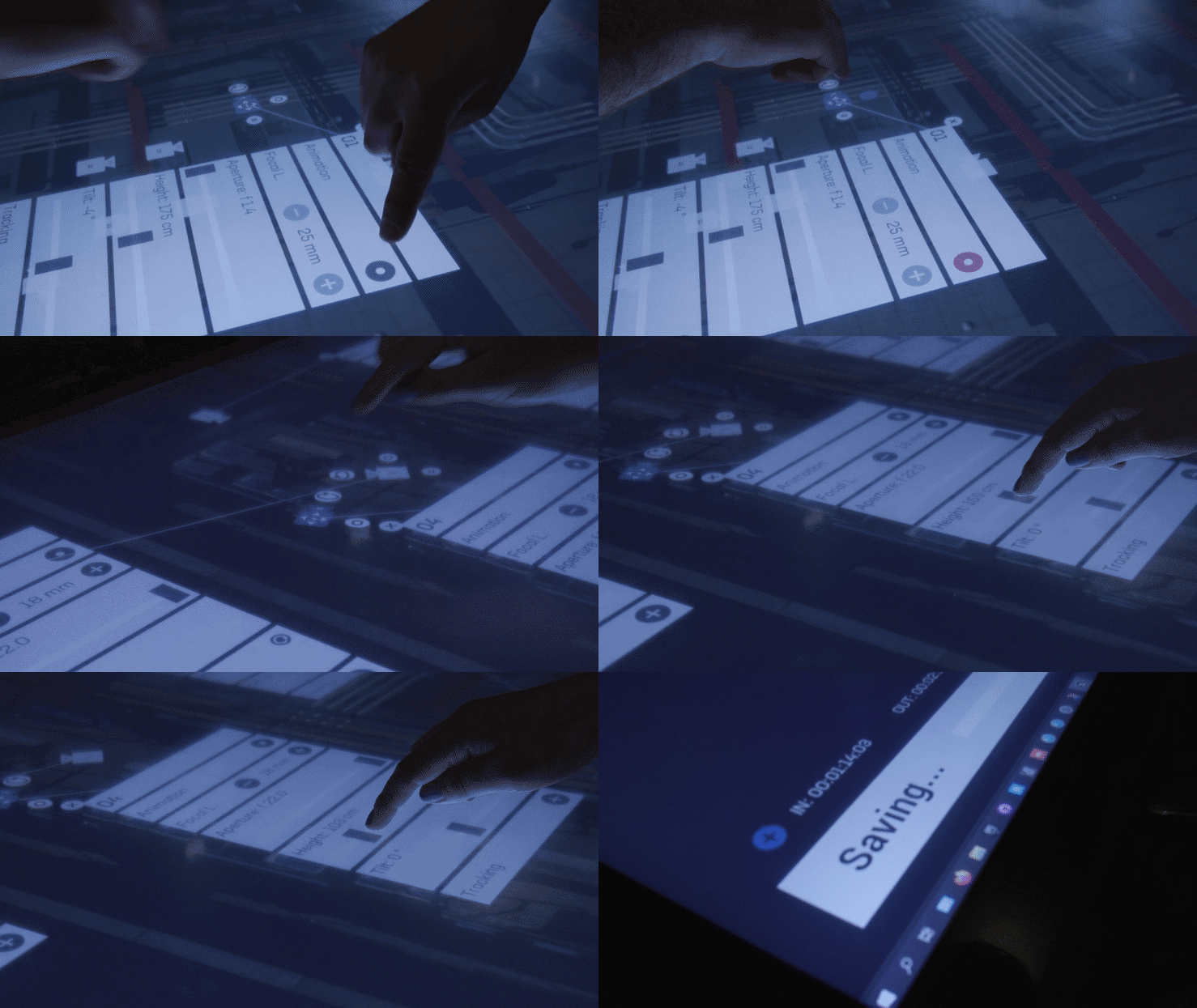
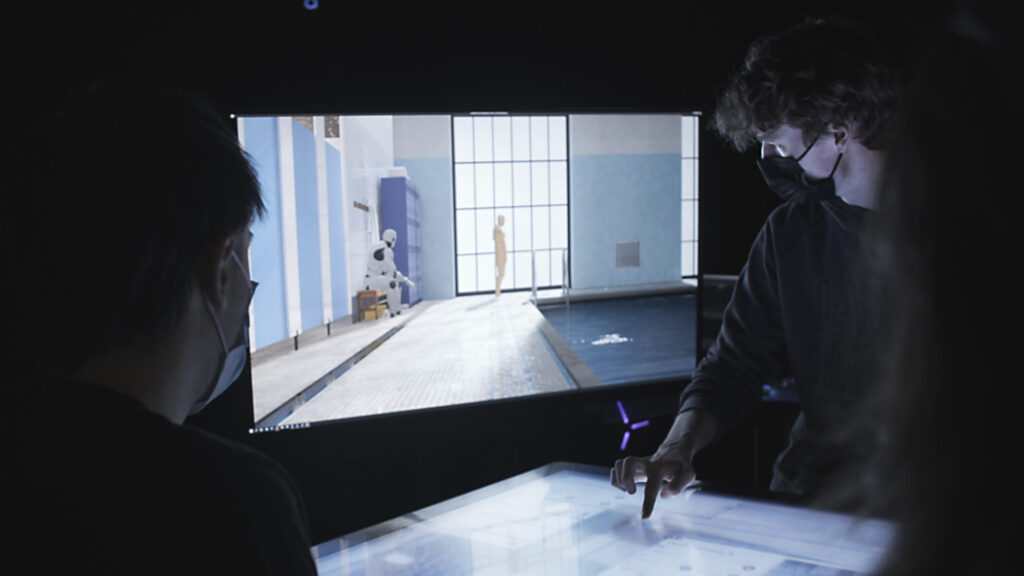
Directors, cinematographers and production designers gather at a single touchscreen desk and explore how space, light, props and acting translate into cinematic sequences. The desk shows the top view of your location; a second monitor shows the output of the virtual camera — rendered live.
Handling a virtual camera by hand.
The positions and movements of virtual actors and cameras in 3D space are rendered in real time into 2D images — so what the team stages is what appears on screen.

Pre-visualization that keeps the whole crew in the frame.
Collaborative blocking & staging
Lay out camera positions, actor marks and set geometry together on one touchscreen — no single-operator bottleneck.
Real-time photoreal render
Virtual cameras and actors are rendered live into cinematic sequences with Unreal Engine.
Virtual & physical staging
Work fully in the virtual scene, or combine it with physical staging for hybrid pre-production.
Built for every creative lead
Director, DoP, production designer and crew — designed around the whole team, not one seat.

Proven in a working conservatoire.
cineDESK is used at HKAPA's School of Film and Television every day — in classrooms, studios and symposia, with students and professionals alike.
We're looking for partners to build this with.
From industry pilots to joint research and teaching — let's talk about where cineDESK goes next.
Explore collaboration →One desk. The whole crew. The shot, before the shoot.
The touchscreen desk displays the top view of your location; a second monitor shows the virtual camera's output. Everything you stage is rendered live in Unreal Engine.
From empty stage to edited sequence.
cineDESK follows a real production sequence — each step builds on the last, and the timeline lets you go back and refine in an iterative loop.
Bring in the world
Load 3D assets of the film location, props and actors — including MetaHumans created in Unreal Engine.
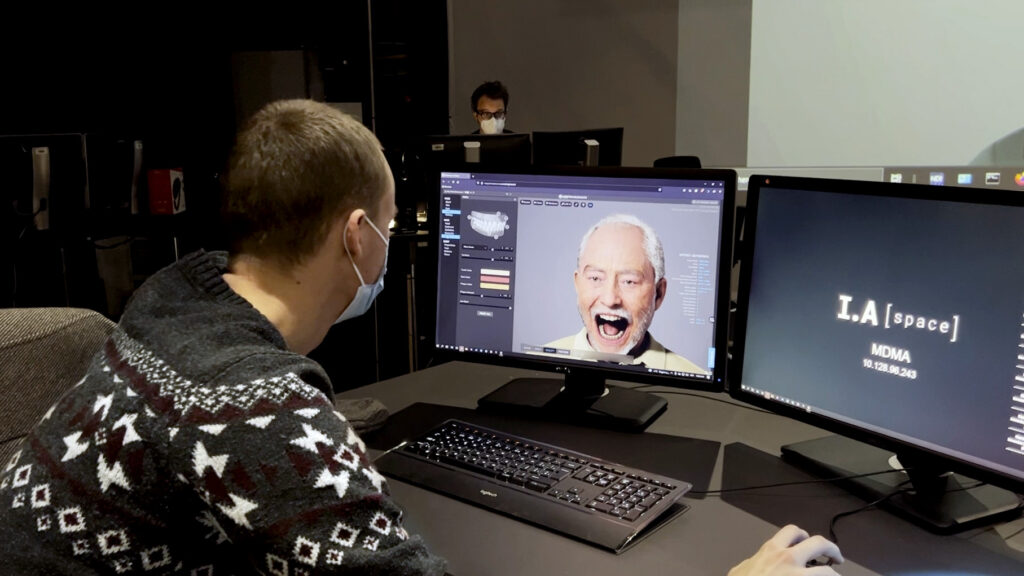
Position and light the scene
Quickly place virtual actors and props, set the lighting and define camera angles to build an animatic of the scene.

Animate the performance
Animate virtual actors with standard loops — walking, sitting, looking around. Record, play back and rearrange the blocking.
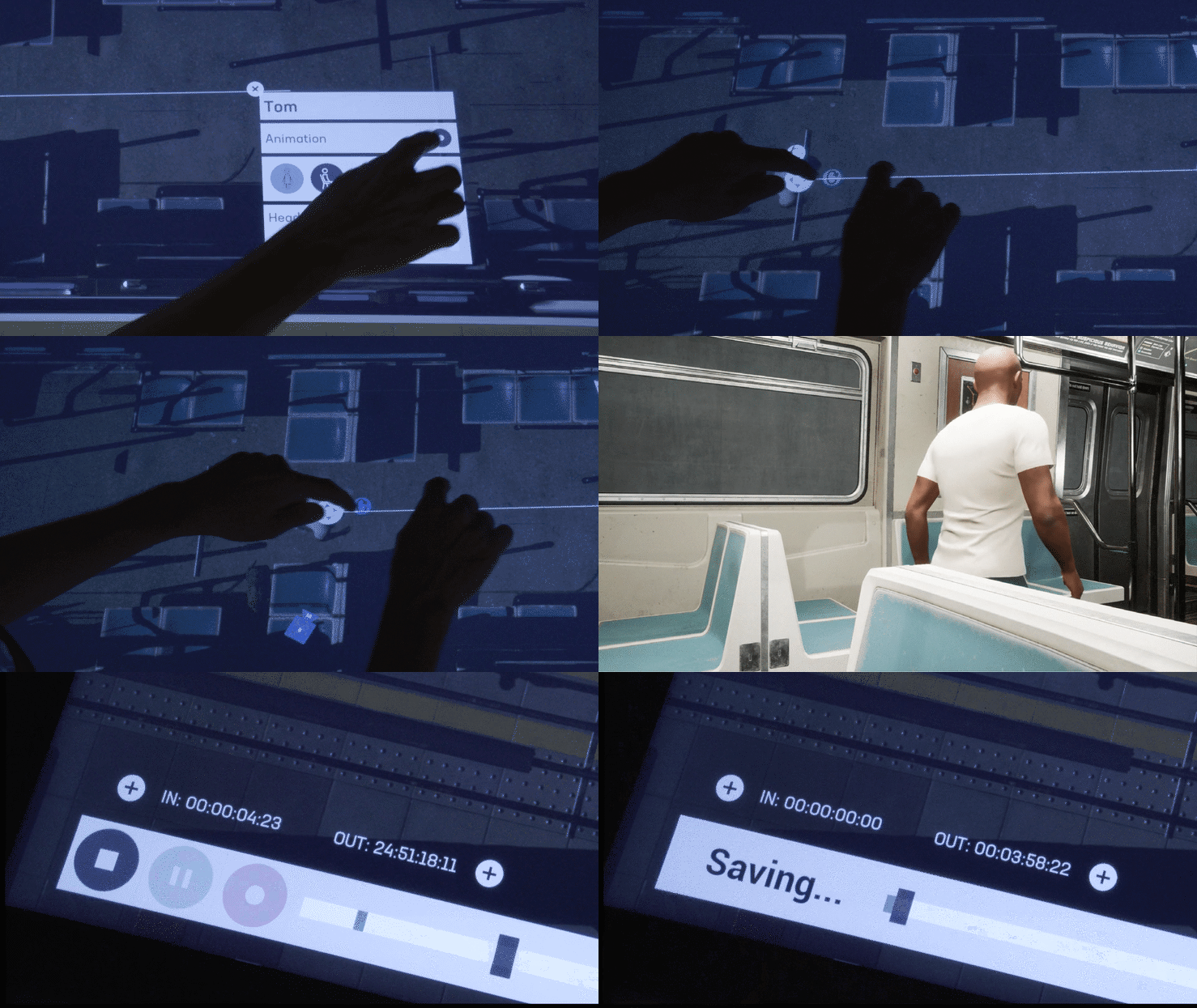
Move the camera
Animate the virtual cameras while the performance plays back, defining angle, framing, focal length, focus and tracking. A timeline lets you refine iteratively.
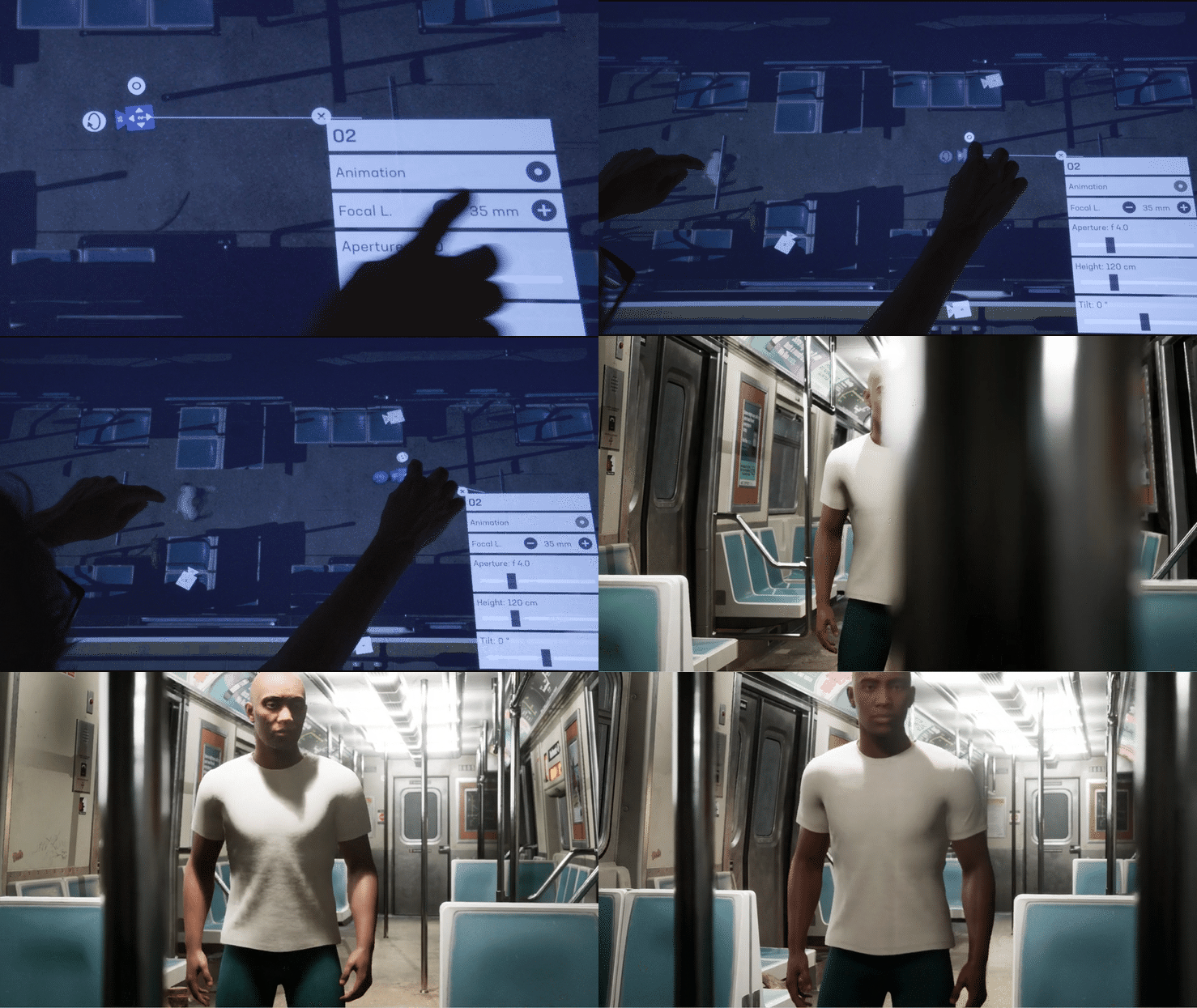
Cut the sequence
A basic editing feature lets you review the shot breakdown and the timing of your staged scene — assembling shots into a sequence.
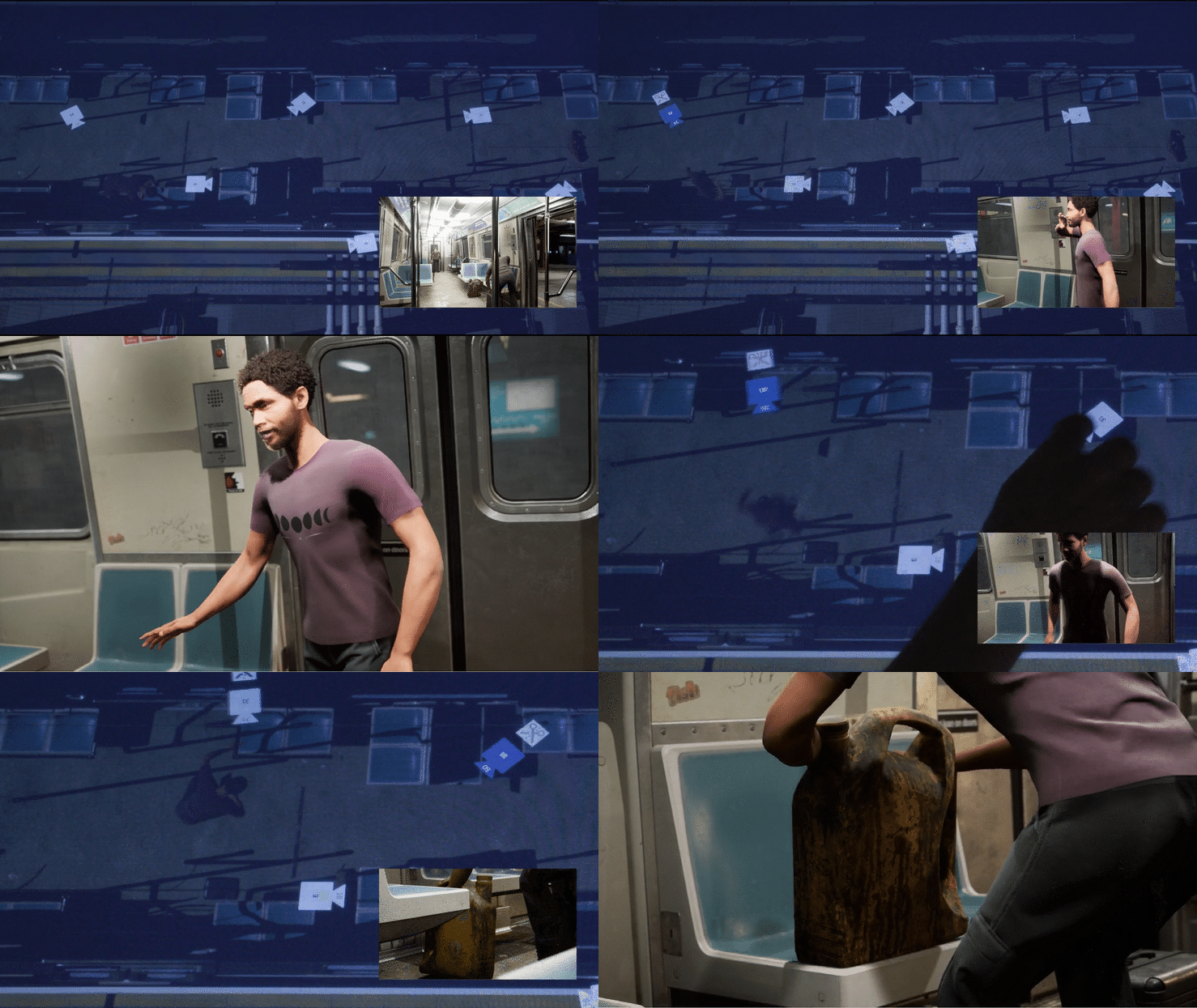
Bring real actors into the virtual scene.
Beyond the touchscreen, cineDESK's physical-staging mode drives the virtual characters and cameras with live performance — for more individualized, sophisticated results.

Working with actors
Stage with real actors to animate the virtual characters individually — using motion-capture systems (Rokoko, Xsens, OptiTrack, Vicon) and face tracking via iPhone / ARKit.

Intuitive camera handling
Instead of the touchscreen, a position-tracked iPad lets the cameraperson operate the virtual camera as if it were a physical, hand-held rig.
The technology stack.
The virtual dolly and Gear Head Simulator are recent additions, co-developed with local university teams.
The desk, in real sessions.


Photos · HKAPA School of Film & Television
See it in motion.
The clearest way to understand cineDESK is a live demonstration. We'd be glad to arrange one.
Request a demo →Built through practice, across two continents.
cineDESK began as practice-based research at the Zurich University of the Arts and grew — with HKAPA and the FilmEU alliance — into a worldwide network of film schools building the future of previsualization together.
From ZHdK's Immersive Arts Space
cineDESK's core implementation was developed at the Zurich University of the Arts, where the Immersive Arts Space built the touchscreen tool and the Unreal Engine plug-in that powers it.
Extended functionality at HKAPA
The Hong Kong Academy for Performing Arts joined the project to develop extended functionality, bringing cineDESK into a new teaching and research context and widening its reach across Asia.
Shared with the field
In February 2023, a three-day cineDESK workshop for faculty and leadership of GEECT-accredited institutions ran at ZHdK — hands-on training, technical background and teaching concepts.
At the 2022 CILECT Congress in San Sebastián, ZHdK lecturers presented the latest version of cineDESK with hands-on sessions for film educators worldwide.
Where the inquiry is heading
Current work spans virtual-production pedagogy, collaborative tool design for creative teams, and AI-integrated filmmaking — carried forward through co-productions and exchange between partner institutions.
Capturing how films get made — to build AI that supports the craft.
Beyond previsualization, cineDESK turns previously uncollectable production practice into structured data.
Filmmaking knowledge lives in practice. cineDESK makes that practice studyable.
Using sensors, virtual cameras and other capture devices, it records the interactions, processes and decisions of a working crew — data that was previously impossible to gather.
The goal is a local data model of the Hong Kong film industry: a foundation for AI that emulates and enhances how creative teams collaborate, share knowledge and solve problems together.
The applications reach beyond film — into education, professional training, and any field where effective teamwork matters.

A partnership, not a product.
HKAPA, ZHdK and the FilmEU alliance joined forces to create cineDESK — and it has grown into a worldwide network that develops the platform, teaches with it, and shares it onward. New partners are welcome.

Two schools, one team.
cineDESK is built by researchers, educators and developers across ZHdK and HKAPA — from the engineers who wrote the tool to the filmmakers who teach with it.

Research partners welcome.
If your school or lab works where cinema meets real-time technology, let's compare notes.
Start a research conversation →We're looking for partners to build this with.
cineDESK has proven itself across two conservatoires. The next chapter is bringing it into real productions and more classrooms — and we're inviting collaborators from both industry and academia.

Studios, production houses & technology partners
Put cineDESK to work on real projects and help define the professional workflow.
- Pilot the platform on live pre-production and previz
- Co-develop features for virtual-production pipelines
- Integrate camera, capture and rendering technology
- Train crews on collaborative previsualization
Film schools & research institutions
Join a practice-based network at the intersection of cinema and real-time technology.
- Build your own cineDESK with the tutorial kit and open-source Unreal plug-in
- Send faculty and students to blocking & staging workshops
- Co-produce and run cross-institution student projects
- Collaborate on publication and conference work
Three ways institutions get started.
Established with ZHdK and now open more widely — adaptable to your resources and goals.
Build it yourself
A tutorial kit with hardware recommendations, the open-source Unreal plug-in, and remote support so your team can build cineDESK on site.
Workshops
Hands-on introductory and project workshops in blocking and staging — bring an idea and a location, and stage your own scene.
Local courses
Introductory courses or custom workshops with your students, on your premises, subject to availability.
Let's make something together.
Tell us about your studio, your school or your project. We'll set up a conversation and, where it fits, a live demonstration of cineDESK.
Scholar-practitioner with 25+ years across film narrative, production design and digital media — spanning visual-effects supervision on Hong Kong action cinema, award-winning screenwriting, and practice-based research into immersive storytelling technology.
terrylam@hkapa.edu → Faculty profile ↗Co-developer of cineDESK, working across cinematography, editing, visual effects, virtual production and immersive storytelling — with a career spanning VFX supervision on Hong Kong features, VR and immersive projects, and collaborative pre-production.
vincentcheung@hkapa.edu → Faculty profile ↗